Lane Swimming Etiquette for Beginners: What You Need to Know
Lane swimming can feel a bit intimidating the first time. You are trying to work out where to go, how fast to swim, when to stop, and whether you are in someone’s way. The good news is that lane etiquette is much simpler than it looks once you know the basics.
If you are an adult beginner, the aim is not to look perfect. It is to move with a little awareness, respect the other swimmers, and relax enough to enjoy the session. Most people in the pool are too focused on their own swim to care whether you are still learning the system.
Choose the right lane
The first rule is simple: pick a lane that matches your pace. If you choose a lane that is much too fast, you will feel rushed and awkward. If you choose one that is too slow, you may end up constantly having to pass people or being passed.
If you are unsure, watch for a minute before getting in. See how quickly the swimmers are moving and whether the lane looks crowded. Choosing the right lane makes everything else easier.
Check before you join
Do not jump straight in without looking. Wait at the side, see what is happening, and make eye contact if needed. If someone is already swimming, let them know you are joining and enter carefully.
A simple approach is to sit or stand at the end of the lane, feet in first, and wait for a gap. That gives everyone a moment to notice you and avoids sudden collisions. It also gives you a second to settle before you start.
Keep to the correct side
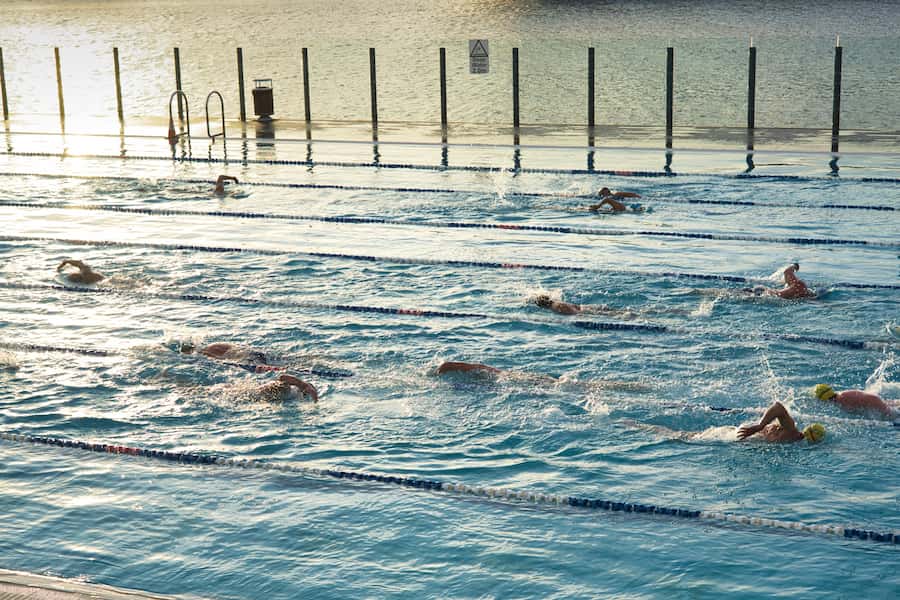
Most lane swimming uses a circle pattern, meaning swimmers keep to one side of the lane and turn in the same direction at each end. That helps everyone move smoothly without crashing into each other. If you are not sure which side is being used, look at what the others are doing and follow their lead.
The key is consistency. Once you are in the lane, stay on the same side and keep your turns tidy. That way, everybody knows what to expect.
Leave space at the wall
One of the biggest beginner mistakes is stopping right in front of the wall and blocking other swimmers. If you need a rest, move to the side at the end of the lane so others can still turn and push off cleanly. Do not stand in the middle of the finish area.
If someone is approaching the wall behind you, let them finish their length before you set off again. A little patience at the wall keeps the whole lane flowing better.
Do not push off too close
Tailgating in a lane is frustrating and unsafe. If you are following another swimmer, leave a decent gap before you push off. That gives both of you room to swim without constant catching up.
A useful rule is to wait until there is enough space for your length to feel calm rather than crowded. If you keep starting right behind someone, you will both end up stopping each other. Space makes the swim better for everyone.
Let faster swimmers pass
If someone catches you, do not panic. Just keep swimming to the end of the length and move aside at the wall so they can pass. You do not need to race them, apologise repeatedly, or freeze in the middle of the lane.
This is one of the most important habits to learn. Lane swimming only works when people are willing to let faster swimmers through without fuss. It is not a competition; it is shared space.
If you want to pass, be clear
If you are the one trying to overtake, be polite and predictable. In many pools, the safest place to pass is at the wall, not in the middle of the lane. If there is a clear chance to go, take it calmly and avoid forcing the move.
Do not swim over someone or squeeze into a gap that is too small. A smooth pass is better than a risky one. When in doubt, wait for the next wall.
Keep stops short
It is fine to stop, especially if you are new or still building confidence. The important thing is to keep your rest brief and stay out of the way. If you need a longer break, move to the corner or step out for a moment.
Long pauses in the middle of a lane make everyone else work harder. A little lane awareness goes a long way. Most swimmers appreciate someone who rests politely.
Ask when unsure
If you are not sure how a lane is working, ask. A coach, lifeguard, or the swimmers already there can usually tell you what to do. There is no prize for guessing wrong and no shame in checking first.
This is especially useful if you are moving from lessons into public lane swimming. A bit of guidance early on can remove a lot of anxiety. That is one reason adult swimming lessons can be so helpful before you start swimming on your own.
Focus on confidence, not perfection
You do not need to know every unwritten rule on day one. What matters most is that you are considerate, alert, and willing to learn. Most lane swimmers started somewhere similar, and most people are far more forgiving than beginners expect.
If you are still feeling nervous, private swimming lesson can help you practise lane confidence in a calmer setting before you go alone. If you are based locally, learn to swim Barnet is another good place to start building confidence step by step.
Simple lane swimming checklist
- Watch the lane before you join.
- Choose a lane that matches your speed.
- Enter carefully and give others space.
- Keep to one side and follow the lane flow.
- Stop at the end, not in the middle.
- Let faster swimmers pass.
- Keep rests short.
- Ask if you are unsure.
Lane swimming gets much easier after the first few sessions. Once you know the rhythm, it becomes one of the best ways to build fitness, confidence, and consistency in the pool.