
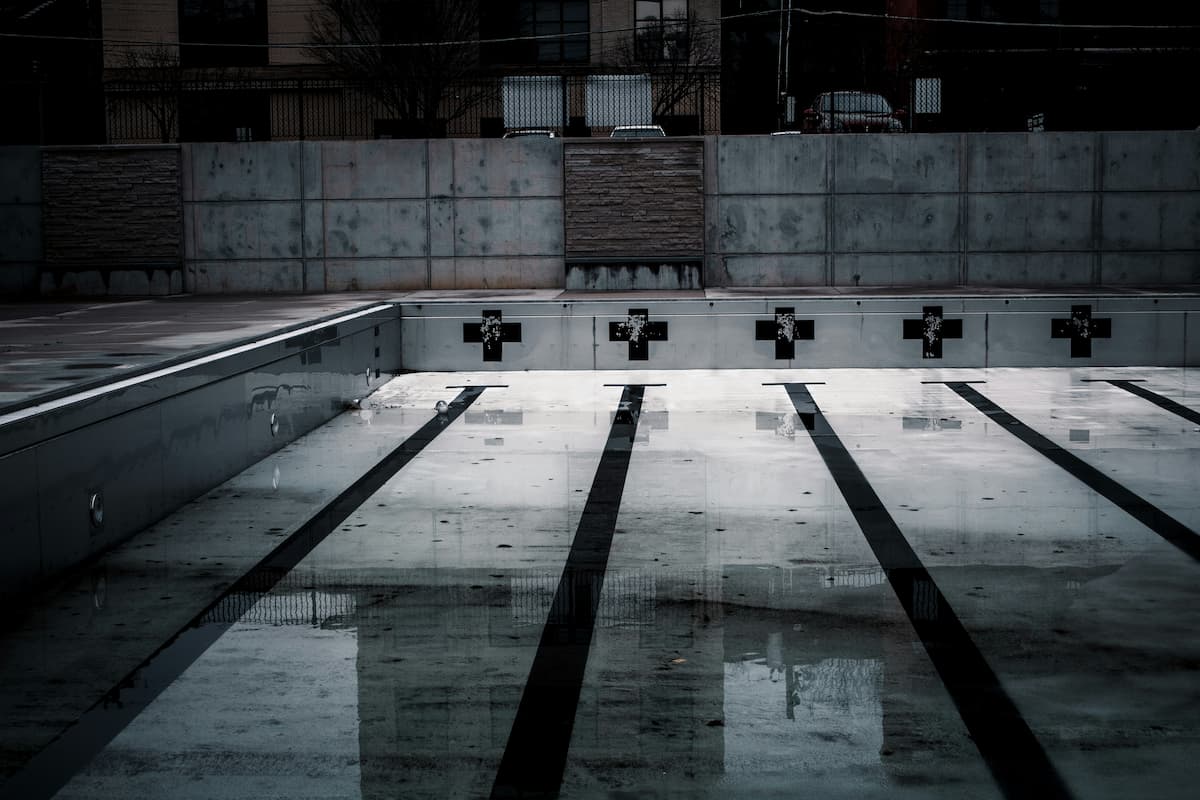
If it feels like more and more local pools are closing or “temporarily” mothballing lanes, you are not imagining it. Across the UK, we are quietly losing public swimming pools year after year – and 2026 is shaping up to be another crunch point for community water space.[^1]
This is not just a sports story. It is a health story, a children’s safety story and a community survival story. When a pool disappears from a town, the damage is felt for decades.[^2]
The state of UK swimming pools in 2026
In the last 15 years, hundreds of publicly accessible pools have been lost across the UK, with the pace of closures accelerating since the pandemic.[^1] Joint analysis from Swim England and ukactive suggests that a large majority of water space lost in that period has disappeared since 2020 – a stark illustration of how severe the post‑Covid, high‑energy‑cost era has been.[^1]
Industry tracking reports indicate that the UK is currently losing around 23–25 public pools per year, once you balance new openings against permanent closures.[^3] In a recent 12‑month period, only a small number of new pools opened compared with permanent closures, leaving the UK with just over 4,200–4,300 facilities – down from roughly 4,500–4,600 before the pandemic.[^3][^4]
Behind those averages are local “swimming deserts”. Regions such as parts of the North West and Scotland are already highlighted as areas where access to water is becoming critically limited, especially for people who cannot afford private clubs or long journeys.[^3]
Ageing buildings, ageing boilers – and a brutal energy bill
One of the quiet truths of this crisis is that a huge share of the UK’s public pools are simply old. Sector analyses indicate that around 60% of pools are now beyond their expected lifespan or in urgent need of refurbishment, with many built in the 1960s–1980s and now coming towards the end of their shelf life.[^3][^4]
Most public pools are decommissioned at an average age of just over 30 years because the fabric of the building, plant and pipework becomes too expensive to keep patching up.[^3] When that moment collides with a council budget crisis and a spike in energy prices, the “repair or replace” conversation very often ends in permanent closure rather than investment.[^1][^5]
Energy is the killer. Heating hundreds of cubic metres of water to 28–30 degrees, and the air above it, for 14–16 hours a day is extraordinarily expensive.[^6] Evidence collected from operators shows bills up to two to three times higher than in 2019, even after government support schemes.[^6][^7] Across the wider leisure sector, total energy costs have risen from the order of £500 million in 2019 to well over £1.2 billion by the mid‑2020s, once higher tariffs and standing charges are factored in.[^6][^7]
Many centres survived the 2022–24 energy crisis only because of short‑term support funds and emergency council subsidies, such as the Government’s Swimming Pool Support Fund and related Sport England programmes.[^8][^9] As those schemes taper, 2026 is precisely when managers are being forced to make hard decisions: raise prices again, cut hours, close slides and teaching pools – or shut the doors altogether.[^1][^6][^8]
The public health cost of losing pools
When a swimming pool closes, what is really lost is health capacity. Swim England’s Value of Swimming research calculates that regular swimming prevents tens of thousands of cases of ill health in England every year, including dementia, Type‑2 diabetes, depression and hip fractures.[^2]
That research estimates that swimming generates around £2.4 billion of social value per year, with publicly accessible leisure facilities responsible for about £1.6 billion of that impact.[^2] Put another way: every £1 spent on swimming is estimated to create about £6.34 in wider social value, once you factor in reduced NHS costs, improved mental health and increased productivity.[^2]
Looking ahead, modelling suggests that continued pool closures could contribute to a substantial rise in inactivity‑related conditions, including Type‑2 diabetes, with associated NHS costs running into hundreds of millions of pounds over the next decade.[^2] That is before you count the basics such as children not learning to swim 25m, or older adults losing one of the only low‑impact forms of exercise they can manage.
From poolside, you see this every week. The person rehabbing a knee injury who can only jog in deep water. The 70‑year‑old who can no longer manage a hill walk but can still swim gently for 20 minutes. Take away the local pool and their realistic options fall close to zero.
Why your local pool is a frontline health asset
For most communities, the local public pool does a lot more than offer casual lane swimming.
On a typical week, that water space is used for:
- School swimming lessons and water safety.
- Group learn‑to‑swim classes for children and adults.
- Club training for swimmers, triathletes and water polo.
- Aquafit and rehabilitation classes prescribed by physios or GPs.
- Informal social meeting points – especially for older adults and new parents.
National participation data already shows that a significant share of children are leaving primary school unable to swim 25m confidently, with Covid‑era disruption and facility closures both playing a role.[^1][^9] Remove the local pool and it becomes much harder for schools to deliver statutory swimming, or for families without cars to get their children into lessons at all.[^2]
This is why Swim England and ukactive now talk explicitly about pools as “vital social infrastructure”, not optional leisure luxuries.[^1][^9] When a council spreadsheet lists a pool’s annual subsidy, it rarely shows the diabetes cases avoided, the falls prevented or the anxiety and depression eased.[^2]
Public vs private: who can still swim?
As public pools close or cut opening hours, private health clubs, hotel pools and boutique swim studios are seeing a rise in demand – in some cases around 10% growth in membership or bookings as displaced swimmers look for guaranteed water time.[^3]
At the same time, public swim prices have been creeping up, with average adult pay‑as‑you‑go swims now sitting at around £5.50–£5.60 nationally and over £6.30 in London, according to industry surveys and council tariff reviews.[^3] That narrows the gap between “cheap” public swims and entry‑level private options, especially if you are a regular swimmer.
The result is an uncomfortable split:
- People with stable incomes can often shift into private clubs or book 1‑to‑1 coaching in smaller, privately run pools.
- Those on tighter budgets simply swim less – or stop altogether.
Specialist 1‑to‑1 coaching in private pools (like the sessions we run in Barnet and Hertfordshire) is becoming one of the only reliable ways to get uninterrupted, high‑quality water time, especially for adults juggling busy schedules or children who struggle in crowded public sessions. It solves the access problem for individuals, but it does not replace the need for public, affordable water space that anyone in the community can walk into.
Can technology and decarbonisation save UK pools?
The good news is that solutions exist – and some are already being tested.
- Air Source Heat Pumps and modern plant: A growing number of councils and operators are replacing old gas boilers with heat pumps and high‑efficiency filtration systems, cutting fossil‑fuel use and stabilising running costs.[^6][^10]
- Data‑centre heat recovery: Projects that use waste heat from small data centres to warm community pools can dramatically lower gas bills and emissions.[^10]
- Fabric upgrades: Measures like better insulation, pool covers and smarter ventilation can make six‑figure differences to annual running costs in larger centres.[^10]
The challenge is capital. Many councils simply do not have the upfront funds, or the expertise, to redesign a 1970s leisure centre around modern low‑carbon technology, even when the payback period is attractive on paper.[^5][^7][^10] Without external funding or national programmes that treat pools as essential health infrastructure, it is often cheaper – in the narrow sense – to close.[^1][^8]
What you can do to support your local pool
If you care about having a pool in your community five years from now, there are some practical steps you can take.
- Use it more. Regular visits, especially at quieter times, directly support income and make the case for keeping lanes open.
- Ask questions. Find out whether your local pool has a user group, campaign or consultation. Many areas now have “Save Our Pools” or “Keep Our Baths Afloat” campaigns you can join or amplify.[^5][^11]
- Talk to decision‑makers. Email your councillors and MP with concrete points: school swimming, health inequalities, cost to the NHS, and the fact that swimming delivers more than six times its cost in social value.[^2]
- Support smarter investment. When refurbishments or decarbonisation projects are proposed, back them publicly. Long‑term savings from efficient plant and heat pumps are often the difference between survival and closure.[^10]
And if your local public pool is already under pressure, you can still keep your own swimming – and your children’s swimming – moving forward. Booking 1‑to‑1 coaching or contacting us about sessions in smaller, well‑maintained private pools is one way to guarantee consistent water time while the wider system catches up.
But the bigger fight is not just about individual access. It is about whether towns and suburbs across the UK will still have a warm, bright, noisy pool at their heart – a place where every child learns to swim, every adult has a realistic path back to fitness, and every community has somewhere to gather around the water.
If we want that future, 2026 has to be the year we stop treating pools as a drain on the balance sheet and start seeing them as what they really are: frontline health assets that we cannot afford to lose.[^1][^2]
[^1]: https://www.ukactive.com/news/pace-of-swimming-pool-closures-increasing-warn-swim-england-and-ukactive/ [^2]: https://www.swimming.org/swimengland/value-swimming-research/ [^3]: https://www.leisuredb.com/blogs/2025/7/22/press-release-state-of-the-uk-swimming-industry-report-2025 [^4]: https://online.flippingbook.com/view/832923406/44-45/ [^5]: https://www.swimming.org/swimengland/new-data-shows-pool-closures-increasing/ [^6]: https://www.swimming.org/swimengland/growing-energy-crisis-pools-under-threat/ [^7]: https://communityleisureuk.org/news/half-of-uk-community-swimming-pools-face-closure-or-cuts-amid-crippling-energy-costs/ [^8]: https://www.gov.uk/government/news/nearly-200-leisure-centres-supported-by-swimming-pool-support-fund [^9]: https://www.swimming.org/swimengland/government-investment-welcomed/ [^10]: https://eesgroup.co.uk/the-impact-of-rising-energy-costs/ [^11]: https://outdoorswimmer.com/featured/save-our-pools/