Of all the things I work on with adult swimmers, breathing in front crawl comes up more than anything else. It is the reason most adults feel exhausted after two lengths. It is why confident pool swimmers fall apart in open water. And it is almost always fixable — once you understand what is actually going wrong.
Here is everything you need to know.
The core idea: exhale in the water, inhale in the air
Most people try to do both in the brief moment their face is to the side. That is the root of almost every breathing problem I see.
The correct pattern is simple:
- Face in the water: continuous, relaxed exhale through nose and mouth
- Head turns to the side: one quick inhale through the mouth
- Head returns: exhale begins immediately
You are never holding your breath for long with your face down. You are never trying to exhale and inhale at the same moment. The side breath is just a refill — a quick sip of air — because most of the work happened underwater.
A useful rhythm for learning is to breathe every three strokes. This forces you to exhale through the recovery strokes and builds the habit of continuous underwater breathing.
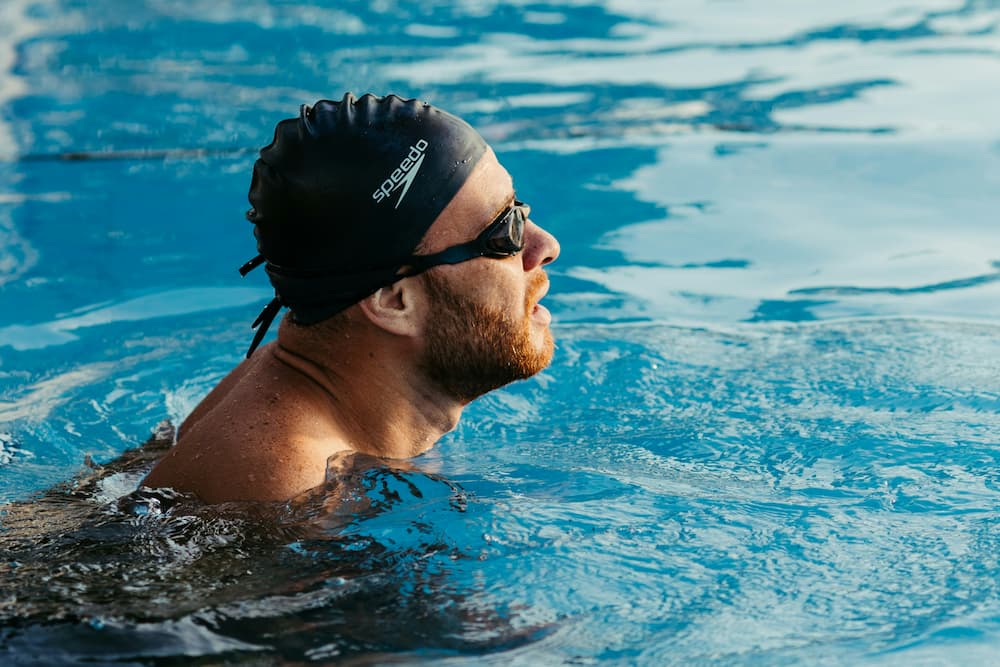 One-to-one coaching at our Barnet and Borehamwood pools.
Body position and head movement
Good breathing is not about neck strength or speed. It is about body rotation — and getting that right changes everything.
When your face is down, keep your head neutral, looking slightly toward the pool floor rather than forward. This keeps your hips high. When your body rolls and you turn to breathe, your head should ride on that rotation rather than lift independently.
The cue I use most on poolside is: turn, don’t lift.
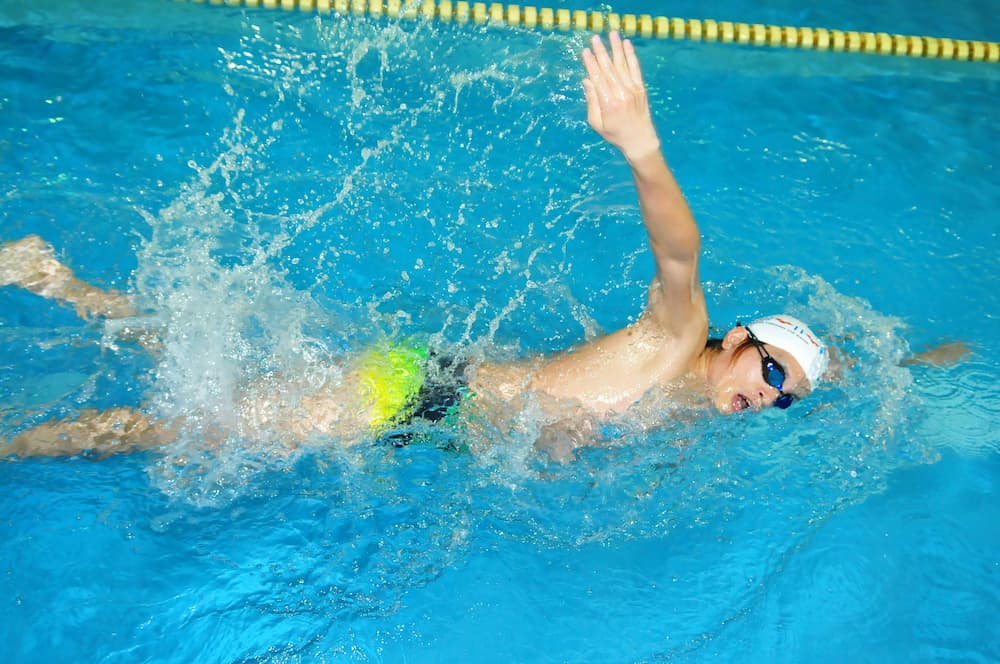
When you turn to breathe, one goggle stays in the water and one comes out. Your lower ear should still be touching the surface. If both goggles are clear of the water, you have lifted too far — your hips have dropped and you are fighting the water rather than working with it.
Breathing timing, stroke by stroke
Assuming you breathe to the right every three strokes:
- Left arm enters and extends forward. Right arm finishes its push. Body rolls slightly left, face down, exhaling.
- Right arm recovers over the water. Left arm begins to catch. Body starts to roll right.
- As your body rolls right and your right arm passes your hip, your head turns with the roll.
- A small pocket of air forms beside your mouth from your forward movement. Quick inhale through the mouth.
- As your right hand reaches your head on recovery, roll back toward flat. Head returns face-down before that hand enters the water.
- Exhale steadily for the next two strokes until the next breath.
The key is that you should have finished most of your exhale before you turn. The side breath is a refill, not a rescue.
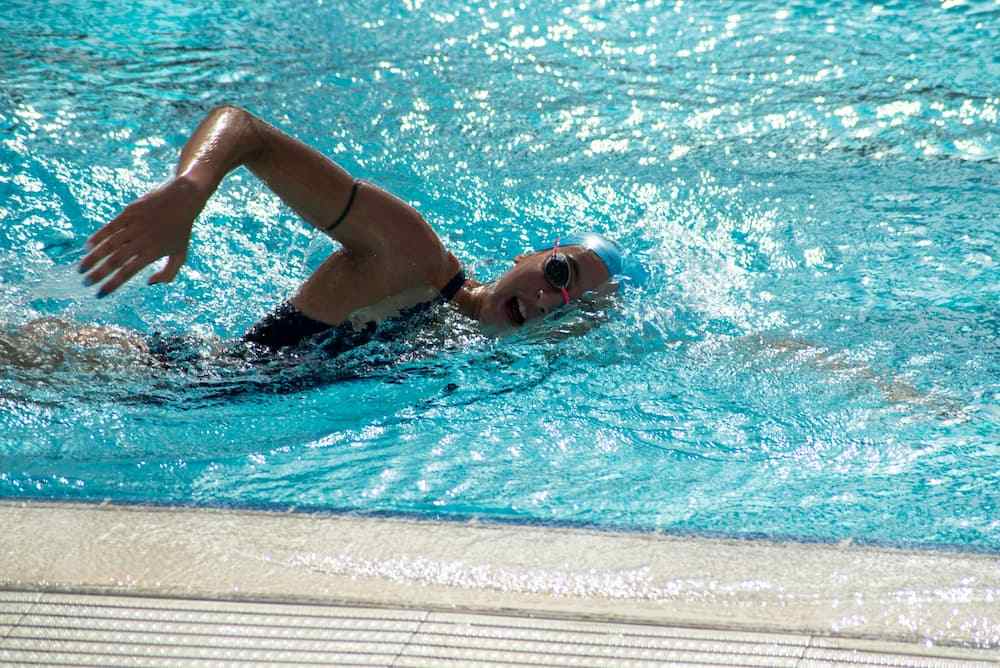 Technique work at our private pool in Arkley, Barnet.
Trickle vs explosive exhale
You will hear both approaches discussed in swimming circles. Here is the practical difference:
Trickle breathing means a continuous, gentle stream of bubbles through nose and mouth the whole time your face is in the water. This is the right approach for learning, distance swimming and open water. It keeps you relaxed and prevents that panicked feeling of running out of air.
Explosive breathing means holding your breath longer, then releasing most of it in a short burst just before turning. Some sprinters use this, but it is harder to control and a poor starting point for anyone still developing their stroke.
If you are working on your breathing, focus on the steady trickle. The moment you can maintain relaxed, continuous bubbles underwater, everything else becomes easier.
The five most common mistakes
In thirty years of poolside coaching, I see the same errors again and again:
Holding the breath underwater. The fix: start exhaling the moment your face goes in. Your lungs should feel ready to refill when you turn, not bursting.
Lifting the head forward to breathe. The fix: think one goggle in, one goggle out. Turn the head with the body roll — do not crane the neck forward.
The lead arm collapsing when breathing. The fix: keep the front arm long and just below the surface while you breathe. Think of resting on it momentarily. If it drops, your balance goes with it.
Kicking harder when breathing. The fix: same small, relaxed flutter kick throughout. Breathing should not change your leg rhythm at all.
Turning too late. The fix: start the head turn earlier, as your body rotation begins — not after your arm has already entered the water.
If you are doing 1-to-1 coaching with me, I will film your stroke from underwater so you can see exactly which of these applies to you. Most swimmers are surprised — what they think they are doing and what they are actually doing are often very different things.
 Adult swimming lessons available seven days a week.
Six drills to practise in the pool
These work in any pool and you do not need any specialist equipment for the first two.
1. Wall bubble drill Stand in shallow water, hold the wall with one hand, face in the water, exhale gently as bubbles. Lift your face to inhale, then repeat. Keep going until the rhythm feels automatic before you try it while swimming.
2. Sink-down drill In chest-deep water, take a breath, curl forward and let yourself sink while slowly exhaling. When your air is nearly gone, stand and inhale. This teaches complete, relaxed exhalation and removes the instinct to hold breath.
3. Kickboard side-breathing Hold a kickboard with both arms extended, flutter kick, face down exhaling. Every four to six kicks, roll your body and head to one side, inhale, return face-down. Focus on turn don’t lift and one ear in the water throughout.
4. Side-kicking drill Lie on your side with your bottom arm extended ahead, top arm resting on your hip. Kick gently with your face mostly in the water, turning slightly to breathe as needed. This isolates body rotation without the complexity of full arm timing.
5. Three-stroke breathing pattern Swim easy front crawl, breathing every three strokes — this is bilateral breathing, alternating sides. It balances your stroke and improves rhythm. If three strokes feels too long at first, try every two strokes to one side until your confidence builds.
6. Catch-up drill with breathing One arm stays fully extended until the other arm catches up before you pull. This slows the stroke down, gives you more time to coordinate the breath, and is one of the most useful drills for anyone whose lead arm is collapsing when they turn.
What to do next
If breathing is the thing holding your swimming back, book a session and we will fix it properly. Most adult swimmers see a significant improvement within two or three sessions of focused technique work — not because it is complicated, but because having someone watch from poolside tells you things you simply cannot feel yourself.
If you want to understand how breathing fits into a broader training structure, try our free swim plan tool — it will build you a personalised session plan based on your goal, ability and schedule.
Breathing in front crawl is learnable at any age. I have taught it to complete beginners in their sixties and retaught it to club swimmers who have been doing it wrong for years. The mechanics are the same. The process just takes a little time, the right drills, and someone in your corner.
— Brian FitzGerald, Head Coach, Swimming Class UK